
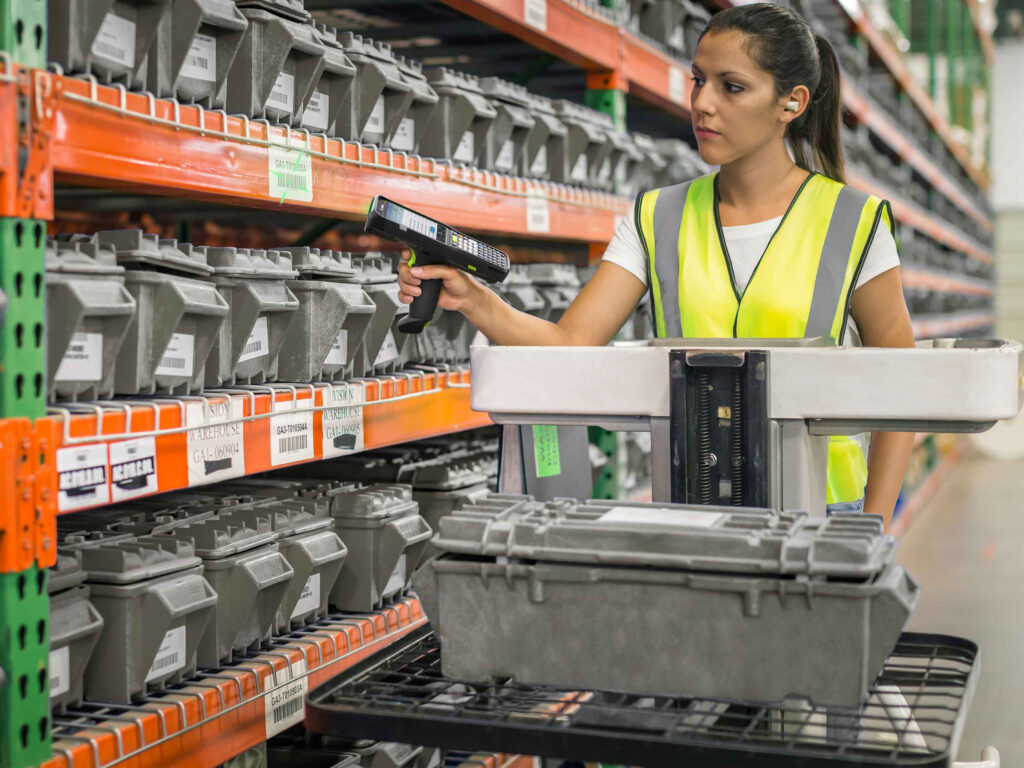
What if your warehouse could make real-time decisions without waiting on the cloud, cutting latency, boosting safety, and giving your team instant visibility into everything happening on the floor? That is exactly why edge computing has become such a game changer for modern operations.
In traditional setups, warehouses generate huge amounts of data from RFID scans, barcode reads, and IoT sensors. This data is usually shipped to the cloud for processing. By the time it comes back, the moment to act may have already passed. Edge computing changes that by placing intelligence inside the warehouse through on-site devices, gateways, or micro data centers. Data is processed locally instead of traveling to a distant cloud, which cuts latency and speeds up every critical action.
This becomes even more vital when running warehouse automation systems, because every second matters when tracking inventory, directing robots, or enforcing safety protocols.
How Do You Unlock Faster Decision Loops?
- Immediate insights: Edge devices analyze barcode or RFID data instantly. If a forklift is entering a restricted zone, you can react in real time.
- Smarter alerts: Anomaly detection runs at the edge — you don’t wait for cloud thresholds.
- Adaptive automation: Robotic pickers or AGVs (Automated Guided Vehicles) adjust their path based on live operational data, not stale batches.
If you offer mobility and data-collection services spanning barcoding to advanced RFID, you can integrate edge solutions to bring these real-time capabilities into your workflow. This is where the power of warehouse automation systems becomes truly amplified.
Surprising Facet #1: Edge Lowers Energy and Cost Up to 75%
A hybrid edge-cloud model is not only fast but also efficient. Studies show that processing workloads locally can reduce energy use by up to 75 percent and cut costs by more than 80 percent when compared to cloud-only setups. So edge computing becomes a faster, greener, and more budget-friendly choice.
Continuous Operational Visibility: No Blind Spots
Edge computing delivers persistent awareness:
- Real-time dashboards: Local microservers feed live metrics — inventory levels, machine health, worker movement — without relying on intermittent network connectivity.
- Fail-safe autonomy: Even if the connection to the cloud drops, your edge devices keep running critical workflows.
- Predictive maintenance: On-site analytics can spot wear and tear early on, triggering maintenance before breakdowns happen.
Safer Warehouse Environments with Edge
- Local safety controls: Edge devices can instantly monitor conditions like temperature, gas levels, or worker proximity. If something’s off, local alerts trigger in milliseconds — no need to wait on cloud processing.
- Reduced risk: Because data stays on-site, sensitive information (e.g. inventory, operations) isn’t constantly sent across public networks — reducing exposure.
- AI-powered edge vision: Deploy computer-vision models at the edge to detect unsafe behavior, spills, or obstacles in real time.
Your Edge Strategy: What You Should Do
- Map your data flows
Identify which data streams (RFID, barcode, IoT) need ultra-low latency and would benefit most from on-site processing. - Build edge nodes that scale
Use rugged gateways or micro data centers that can handle high-throughput barcode/RFID reads, and talk to your cloud when needed. - Integrate edge intelligence
Deploy edge-AI models — anomaly detection, predictive maintenance, safety analytics — so decisions are made locally. - Secure your edge layer
Encrypt data at rest, apply zero-trust models, and integrate with your existing IAM (Identity & Access Management). - Measure ROI
Track metrics like latency reduction, energy savings, downtime avoided, and safety incident improvements to show the value of edge.
Do not forget to integrate supply chain automation where it supports faster processing and more synchronized workflows across your operations.
Conclusion
Edge computing in warehouses empowers you to process large volumes of operational data right where it is generated. That means faster decision loops, stronger operational visibility, and safer environments — all without waiting on the cloud. For your business, especially if you provide mobility and data-collection solutions (barcode scanning, RFID, customized services), embedding edge lets you deliver real-time intelligence that truly boosts efficiency. In a world where every second and every data point counts, edge computing isn’t just an upgrade — it’s essential.
