
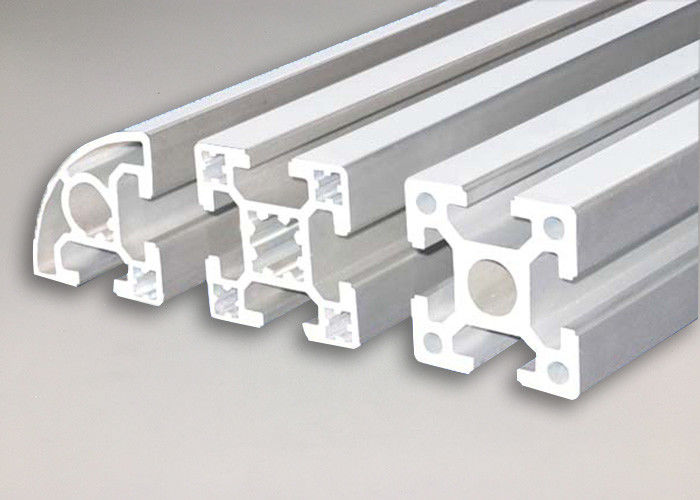
Precision engineering has quietly become the backbone of modern manufacturing, guiding how machines move, how buildings breathe, and how products evolve into lighter, stronger, and smarter versions of themselves. As companies push for efficiency without sacrificing durability, one material consistently proves its value across sectors: aluminium. Its balance of strength, corrosion resistance, formability, and recyclability makes it an ideal match for engineering that demands accuracy at every millimeter.
This is exactly why solutions built using anodised aluminium sections are gaining so much momentum today, especially in industries where performance and precision go hand in hand.
The New Age of Precision: Why Aluminium Stands Out
Traditional engineering depended heavily on steel and iron, but those materials come with weight, rigidity, and limitations in shaping. Aluminium disrupted that pattern by offering the flexibility of shaping without compromising strength.
What makes it ideal for precision-driven applications?
- It supports intricate geometries.
- It maintains dimensional stability.
- It withstands corrosive environments.
- It reduces overall system weight significantly.
From robotics to architectural façades, engineers now choose aluminium because it allows systems to do more with less-less weight, less maintenance, and less environmental impact.
How Precision Engineering Enhances Aluminium’s Value
The true magic happens when aluminium is engineered with intent. Precision processes transform raw material into functional components that seamlessly integrate into advanced systems.
This transformation includes:
1. Tight Tolerances for Consistent Output
Precision engineering ensures repeatability. When thousands of parts must fit together with zero error, even a fraction of a millimeter matters. Extrusion-based aluminium components meet these tight tolerances more reliably than many traditional materials.
2. Advanced Surface Treatments for Extra Durability
While aluminium naturally resists corrosion, surface treatments multiply its lifespan. Anodizing, powder coating, and brushing are not just aesthetic choices, they boost durability, reflectivity, and resistance to harsh climates.
3. Faster Prototyping and Scaling
Engineers love aluminium for its speed advantage. Prototype to production feels smoother because extrusion dies are quick to develop, modify, and scale.
The result? Products that evolve faster than the competition.
Design Freedom: Where Creativity Meets Engineering Accuracy
The world of engineering rarely allows room for artistic freedom. Aluminium changes that.
Architects, engineers, and product designers all benefit from its versatility. It bends, shapes, connects, and integrates effortlessly, encouraging creativity without compromising function.
1. Adaptive Profile Geometry
Whether the requirement is a hollow section, T-slot profile, flat bar, or complex multi-chamber design, aluminium supports it all. Precision engineering ensures that no matter how unique the design, consistency is never lost.
2. Compatibility with Modular Thinking
Modern industries are shifting to modular layouts—factories, automation lines, and building systems that can expand or adapt without major reconstruction. Aluminium profiles help achieve this with structure-ready designs and connector-friendly profiles.
3. Seamless Integration Into Larger Systems
Lighting, cooling ducts, sensors, wiring, aluminium sections can include internal channels and slots to house everything neatly. Engineers no longer need to design additional components, reducing cost and installation time.
A Closer Look at Real-World Applications
Precision-engineered aluminium is not limited to a single field. Its adaptability makes it suitable for nearly every high-performance environment.
1. Manufacturing and Automation
From conveyor frames and machine guards to robotic arms and inspection stations, aluminium forms the backbone of fast-changing industrial setups.
Manufacturers rely on it because it makes reconfiguration faster, cleaner, and safer.
2. Architecture and Building Systems
Today’s buildings explore lightweight façades, sunshade systems, curtain walls, and interior partitions, applications where strength and elegance must meet. Aluminium handles structural loads yet remains visually refined.
3. Transportation and Mobility
Every gram matters in vehicles, aircraft, drones, and EVs. Aluminium brings weight reduction without compromising safety. Precision engineering ensures each part integrates perfectly within compact mechanical spaces.
4. Renewable Energy Structures
Solar panel frames, mounting structures, and wind systems use aluminium for its corrosion resistance and stability against outdoor conditions. It enhances long-term reliability, critical for energy infrastructure.
Quality Through Process: What Sets Engineered Aluminium Apart
Behind every high-performance profile is a chain of controlled processes that guarantee reliability. Precision engineering ensures excellence at each step.
1. Die Engineering and Custom Tooling
A well-designed extrusion die influences accuracy and strength. Cutting-edge die workshops allow rapid customization so industries get exactly the profile shape they need.
2. High-Pressure Extrusion for Uniformity
Modern extrusion lines use automated controls to maintain temperature, pressure, and flow crucial for ensuring consistent cross-sections across kilometres of production.
3. Post-Processing That Enhances Value
Cutting, machining, punching, and coating turn a standard profile into a functional product.
This is also where treatments such as anodised aluminium sections become essential for longevity and surface performance.
4. Testing and Validation
Hardness testing, tensile strength checks, dimensional inspection, and corrosion analysis ensure every piece is ready for critical applications.
Sustainability: A Natural Advantage of Engineered Aluminium
Precision engineering isn’t only about accuracy, it’s also about responsibility. Industries today seek materials that support long-term environmental goals without compromising quality.
Aluminium’s sustainability benefits include:
- 100% recyclability without losing material properties
- Lower energy consumption during processing
- Reduced carbon footprint due to lightweight transportation
- Long service life across decades
Engineered aluminium contributes to greener factories, cleaner construction, and smarter product lifecycles.
Conclusion
In a landscape where accuracy determines performance, aluminium engineered with care is becoming the foundation of modern innovation. Whether it’s in architecture, machinery, energy, or mobility, precision-crafted components offer the consistency industries depend on. This is why many high-performance systems continue to rely on expertly built anodised aluminium sections and other advanced profiles.
For businesses searching for dependable, precisely engineered aluminium solutions, JM Aluminium stands out as a trusted partner shaping the future of high-quality manufacturing. They combine decades of manufacturing expertise with a strong focus on precision, making it a preferred source for industries that rely on accuracy and performance. With advanced extrusion presses, automated finishing lines, and in-house die development, the company ensures consistency across every profile produced. Its wide portfolio serves sectors ranging from architecture to automation, offering both standard and custom-engineered solutions. Backed by strong quality control and continuous innovation, JM Aluminium continues to support businesses aiming for long-term efficiency and reliability.
