
A efficient dock construction requires more than building a deck above the water. It is a careful assessment of various structural and environmental elements to ensure security, stability and efficiency. Two crucial elements that determine the durability and longevity of a dock is the depth of water and the soil condition.
The factors that determine these aspects not just the dock type that’s appropriate for the site however also the dock’s materials that are used, anchoring methods, as well as the overall layout. For commercial or residential application, taking into consideration the conditions of the area can help to select the best kind of dock that will stand up to the demands of the environment around it.
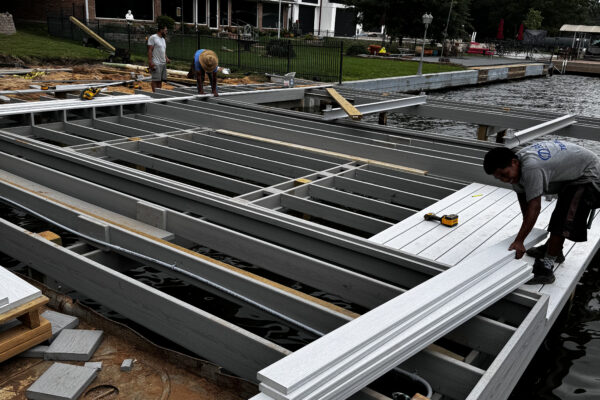
The Role of Water Depth in Dock Design and Stability
Water depth plays an important factor in the performance of a dock in different weather and season conditions. A dock made for shallow water will not function well in more turbulent or deeper situations, and in reverse. Knowing the depth of water will ensure that the dock is accessible and structurally solid over time.
Shallow Water Challenges
In water that is shallow dock installation is fairly simple, however it presents certain issues. The docks constructed in this type of environment typically require careful leveling to avoid uneven support. If pilings or dock posts do not have enough depth into the substratum the posts could shift because of wave action or the fluctuation of levels of water.
Furthermore, areas that are shallow can collect debris or sediment much more quickly, impacting the stability of docks and necessitating periodic maintenance. In areas where the level of water fluctuates according to the tides or seasonal variations floating docks are usually preferable because they are able to easily adjust to changing or decreasing levels.
Deep Water Considerations
The conditions of deep water demand greater sophistication in engineering and methods of installation. The suspended or piling-driven docks usually chosen to ensure adequate support. Because traditional posts aren’t able to penetrate the depths of deep water, pilings that are long and anchoring mechanisms are necessary for the stability of the dock structure.
They must be built to withstand vertical loads as well as lateral movements that is caused by waves or winds. For deep-water areas the availability of appropriate equipment, such as floating barges and pile drivers is essential to ensure an efficient and safe installation.
Additionally, the deeper water is, the greater pressure will be imposed upon the structure of the dock. Engineers have to consider these forces with care to avoid being bent, tilted, or sinking with time.
Fluctuating Water Levels
A lot of rivers, lakes and coastlines are subject to significant changes in the level of water due to the weather, tides or dam operation. This can have an impact on the way docks function during the entire time of the year.
Fixed docks can work well under stable conditions however it could be inaccessible during high tides or at low tides. However floating docks can be adjusted with a consistent height to the surface of the water regardless of the seasonal variations.
In the event of water levels that fluctuate and fluctuating, modular docks or adjustable systems offer the flexibility required to provide access all year round as well as safety.
Soil Conditions: The Foundation of Dock Stability
As water’s depth affects the design of the dock, so too does the kind of soil or substratum under the water affects the way that dock supports are put in place. The soil composition determines how pilings will be moved, the way anchors are held and the way in which the dock responds to stress from the environment.
Sandy or Loose Soil
The loose or sandy soil can be found on riverbanks and beaches However, it poses particular challenges when it comes to dock construction. Sand is prone to shifting, and it is unable to support large structures. In sandy soil, the piles require a deeper drive or strengthened with larger bases in order to ensure stability.
In these types of conditions, floating docks and docks with broad-base foundations are commonly used. They distribute the heavier loads more evenly and stop structures from sinking and moving as the substrate changes.
Inspections on a regular basis are essential for sandy areas since the erosion or shift of sediment may eventually cause support to loosen over time.
Clay or Silt Soil
Silt and clay are more dense and hold in moisture. This may cause them to expand or expand with the changing temperature and levels of water. This can force against pilings and cause them to bend or breaking in dock structures.
In clay soils, a deeper piles or using screw anchors will provide greater stability. Anchoring techniques ensure that your dock is secure as the soil surrounding it undergoes the effects of compression or expansion.
A proper drainage system and regular adjustments are recommended in order to reduce soil pressure, and extend the useful life of the dock.
Rocky or Hard Soil
Compact or rocky soil offers an excellent foundation for docks however it requires special equipment to cut or drive piles of pilings into the soil. The advantages of rocky soil is that it creates a solid foundation that is resistant to shifting and erosion.
But, the cost of installation and times can be more costly due to the extra effort needed to penetrate substrates. The docks constructed on rocks generally last longer and need lesser maintenance, provided that the anchoring system has been properly placed.
Muddy or Organic Soil
A soft, wet, or organic soil is one of the most difficult problems for dock construction. They are unstable and expand easily when weight is added which makes it hard to build a strong base. In the absence of proper reinforcement that the dock is not reinforced, it could be prone to sinking, tilting, or even become dangerous to usage.
For these scenarios, long pilings, helical anchors or floating docks tend to be the most effective alternative. The designs help reduce tension on the substrate and permit the structure to be stable even in the most difficult soil conditions.
Combining Water Depth and Soil Analysis
Each successful dock installation begins by conducting a thorough assessment of the site. Monitoring the depth of the water at various seasons helps determine how changes in the seasons impact dock size and access. Also, performing a soil test will determine the most efficient anchoring technique and what materials you should use.
The combination of these knowledge allows engineers and installers to create an ideal dock which balances flexibility, strength and durability. When building on beaches and rocky shorelines or rivers that are in flux The right mix of soil and depth assessment ensures the highest quality of results.
If you select the appropriate style of dock according to these factors, it does improves the functionality, but it also reduces repairs and maintenance costs.
Environmental Factors to Consider
Beyond depth and soil the environmental factors like winds exposure, waves intensity and ice growth are also influencing the performance of docks. Currents or waves that are strong create lateral forces which can cause the dock to move or become loose. docks.
Similar to cold environments, ice may be pushed against pilings, or cause damage to floating platforms. In order to prevent this from happening, sturdy products like galvanized steel aluminum, or treated timber are recommended. Infrequent inspections, especially following seasons change, can help to spot early indications of damage, and also ensure security.
Conclusion
The soil’s depth and the water’s conditions are the basis of any dock construction project. Knowing how they interplay allows building contractors and homeowners to create docks that are functional as well as durable.
Waters that are shallow or deep and sandy soils require certain strategies to ensure the stability and functionality. When they are properly evaluated and taken into account for, these elements make sure that your dock is sturdy against forces from nature, ensuring safe and secure access to water over the long haul.
Frequently Asked Questions (FAQ)
Q1: What is water depth crucial in dock construction?
Water depth will determine the design of dock, the support system and anchoring technique that is required to provide security and stability throughout the year.
Q2: How can the conditions of the soil affect the performance of docks?
Soil composition determines the way pilings or anchors secure the dock into position. Instabil soils could require more or more robust supports.
Q3: What dock style is best suited to high and low levels of water?
Floating docks work well for fluctuating water levels since they can automatically adjust to the rising and fall of water.
Q4 Do docks work on soft or muddy earth?
Yes it is possible, however they need longer pilings, or floating systems to ensure stability and prevent sinking.
Q5: How do make sure my dock last for longer?
Regular checks, the right choice of material and regular maintenance that is based on the soil’s and water’s conditions can aid in prolonging the life of your dock.
